
Howard Finster exhibition comes to Brenau galleries this fall
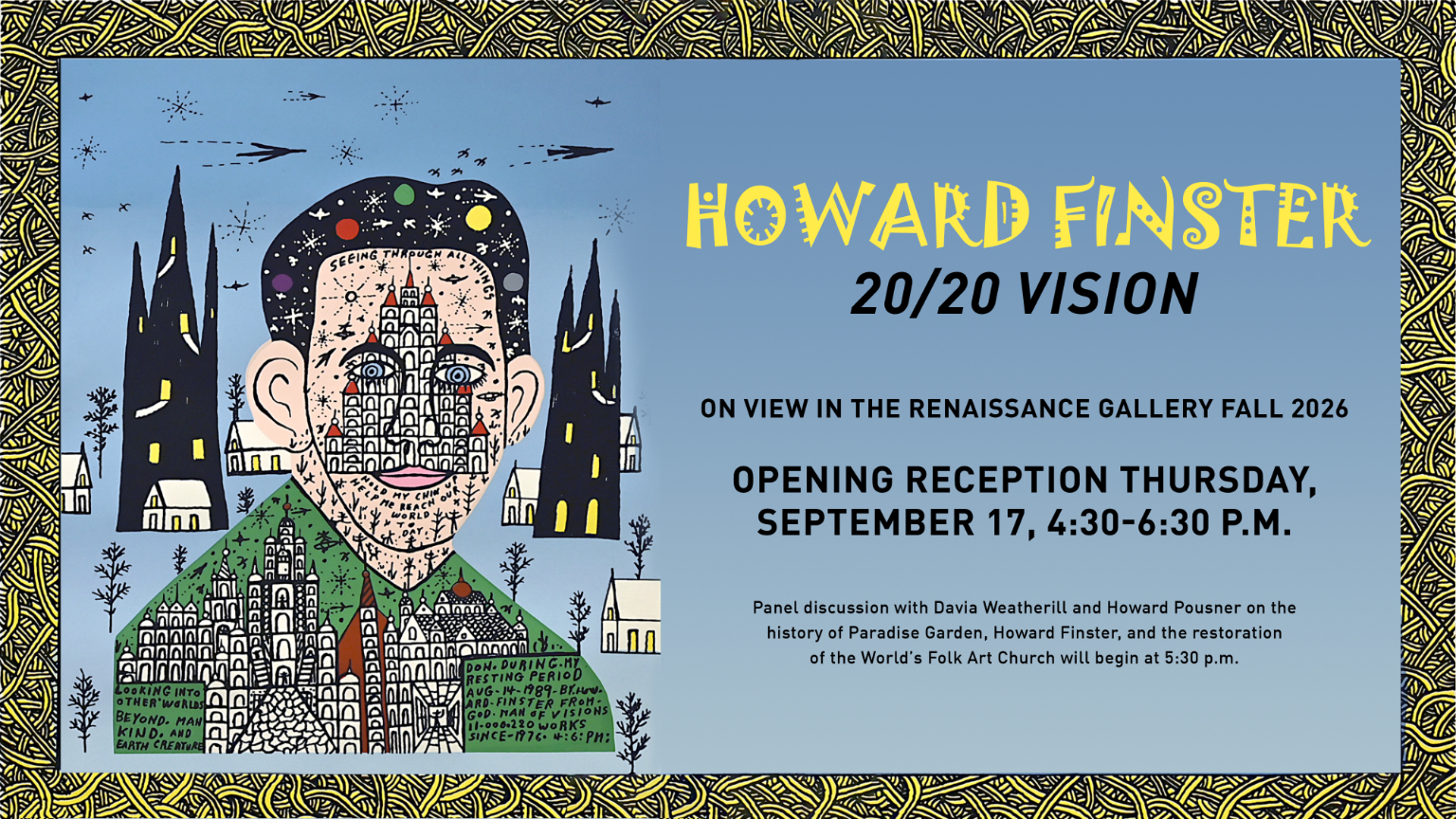
An exhibition of Howard Finster’s work, 20/20 Vision, will be on display this fall at Brenau University.
Rev. Howard Finster (1916–2001) stands as one of the most prolific and influential self-taught artists in American history. Born in Alabama, Finster spent more than 40 years working as a Baptist preacher, tent revivalist and handyman before settling in Summerville, Georgia. There, he transformed a two-and-a-half-acre swampy lot into “Paradise Garden,” a sprawling outdoor art environment composed of recycled materials, sculptures and vernacular architecture.
“The works featured in 20/20 Vision showcase the breadth of Finster’s creative output through pieces drawn from Brenau’s permanent collection, as well as contributions from colleagues, friends of the institution, and the artist’s personal acquaintances,” said Brenau Galleries Director Lybi Cucurullo. “Together, these objects offer a direct and intimate look into the incredible drive, studio practice and enduring legacy of one of Georgia’s most celebrated visionary figures.”
An opening reception will be held on Thursday, Sept. 17, 4:30-6:30 p.m. in the Renaissance Gallery, located on the first floor of the Renaissance Building on the downtown Gainesville square. A panel discussion about Finster, the history of Paradise Garden and the restoration of the World’s Folk Art Church, featuring Davia Weatherill, executive director of the Paradise Garden Foundation, and Howard Pousner, begins at 5:30 p.m. During the reception, the gallery will give away free tickets for the upcoming Finster Fest, which takes place Sept. 19-20 at Paradise Garden in Summerville, Georgia.
In 1976, 60-year-old Finster was repairing a bicycle when a smudge of paint on his thumb reminded him of a human face. He recalled hearing a divine voice instructing him to “paint sacred art,” which he understood as a directive to produce 5,000 works. His works eventually numbered 46,991 distinct pieces before his death.
Finster operated with a relentless, missionary drive to share his message, treating every available surface as a canvas. His work spans a wide range of media and formats, including hand-lettered event posters, painted plywood cutouts, silkscreen prints, “shelf” pieces, and assemblages built from tools, discarded objects and materials taken directly from his studio. His pieces often feature bright tractor enamel paint and layered, handwritten scripture alongside figures ranging from Jesus and George Washington to Elvis and Hank Williams.
“By placing sacred text next to pop culture icons, Finster merged traditional religious art with everyday American imagery,” Cucurullo said. “By the 1980s, Finster’s unique vision caught the attention of the broader art world and popular culture. Paradise Garden became a pilgrimage site for contemporary artists like Keith Haring, who befriended Finster, drew inspiration from his environment, and even collaborated on work in the garden.”
He collaborated with Athens, Georgia, band R.E.M., and appeared in the music video for “Radio Free Europe,” which was filmed at Paradise Garden. Finster and singer Michael Stipe co-designed the artwork for the band’s 1984 album Reckoning. Finster also created the cover painting for The Talking Heads’ 1985 album Little Creatures, depicting band members within a visionary landscape. The cover was named Album Cover of the Year by Rolling Stone magazine, introducing millions of listeners to Finster’s visionary art and solidifying his cultural impact. His growing celebrity even led to a memorable guest appearance on The Tonight Show Starring Johnny Carson in 1983, where he shared his art, music and eccentric charisma with a national television audience.
The exhibit and opening reception are free and open to the public.